THE SECOND YEAR OF THE GTIME PROGRAM...
... at the Royal Melbourne Institute of Technology (RMIT, Australia) (IMPORTANT: (purely online program that does not require on-site attendance at any time!) with its specialisation “Master of Design Futures” is an accelerated, graduate qualification for working professionals or students with work experience. It is suitable for both designers and non-designers who are looking to transition into new design practices and for those wanting to advance their careers in strategic leadership roles.
In this flexible and self-directed degree, you will benefit from experiential learning practices as you develop the strategic skills and tools required for leadership. Empathic research, journey mapping, rapid prototyping and storytelling are all tools that you will learn to use in your problem-solving process.
Participating in this program will equip you to be a design leader by:
extending your practice in strategic, communication and service design
framing this new practice in the context of designing social, cultural and economic futures
introducing you to a close-knit global network of design professionals and different orders of design problems
helping you to identify and articulate contributions you make to organisations, as well as the value that design brings to business, government and society.
Online courses of the 3rd GTIME semester at RMIT
Students joining the MDF program must earn 48 credits (equivalent to 30 ECTS at the TUHH) during their 3 GTIME semester at RMIT. They can choose from the following courses:
• Design Strategy (12cp) — October–December
• Service Design (12cp) — January–March
• Future Design Impact (24cp) — March–June
• Future Design Leadership (24cp) — July–October
In the fourth semester, students write their Master's thesis at TUHH.
Career options:
As a GTIME graduate with a specialisation in Masters of Design Futures, you have a variety of job options. Your skill profile is attractive for many types of companies and organisations in need of business development, including large private and public companies, small and medium-sized companies, start-up companies, as well as municipalities, regions and governmental agencies. Future job titles of successful graduates may be project manager, entrepreneur/CEO/CTO, business developer, process consultant, innovations manager or product and business developer.
Further, more detailed information on the topics (learning methods, industrial relations, learning objectives and course descriptions) can be found on the MDF website at: https://www.rmit.edu.au/study-with-us/levels-of-study/postgraduate-study/masters-by-coursework/master-of-design-futures-mc245
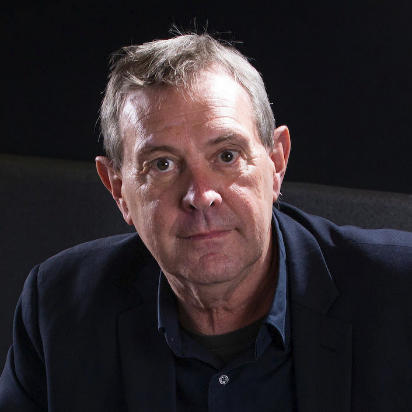
Prof. Marius Foley, Program Manager, Master of Design Futures
Mail to: marius.foley@rmit.edu.au